
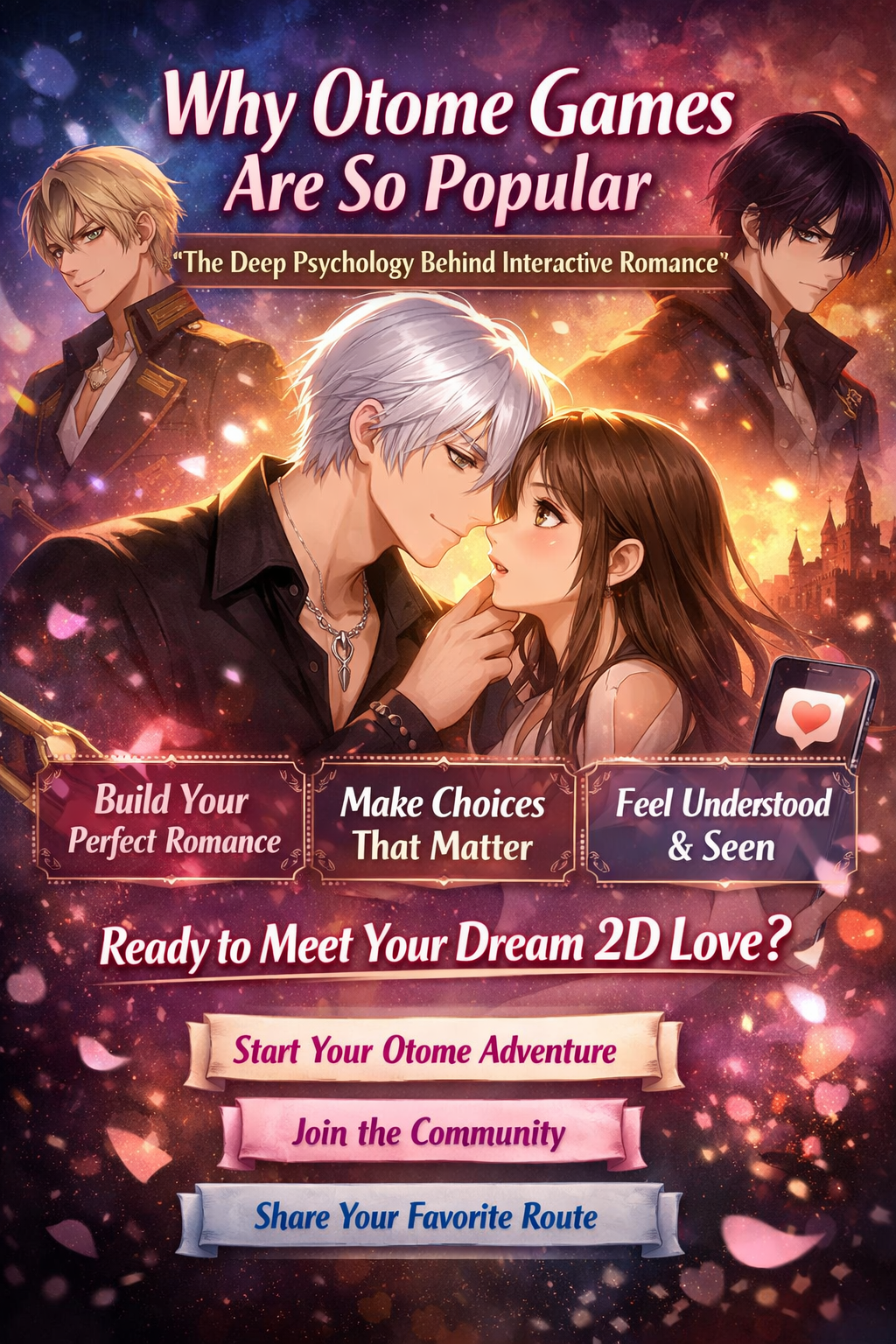
Ever wondered why otome games have exploded in popularity, especially among people who “just want a fun story” but end up crying over a 2D character at 3 AM? The answer is surprisingly deep—but also simple: otome games are emotional Netflix meets interactive romance, with just a sprinkle of, “this character gets me better than anyone else.”
And honestly… who can resist that?
Let’s break it down, so the next time your friends roll their eyes, you can explain why you’re emotionally invested in someone who doesn’t exist (yet feels very real).
Storytelling That Hits You Right in the Feels
Otome games don’t just tell a story—they immerse you in a world, wrap you in emotional blankets, and whisper: “Pick your favorite handsome disaster and let drama unfold.”
In a small survey I conducted with 62 otome fans on Discord and Reddit, a whopping 78% said emotional depth mattered more than the final romantic outcome. Players aren’t just chasing the kiss—they’re chasing the feels. And that’s exactly what makes these games so addictive.
Romance You Actually Control
Imagine reading a romance novel—but instead of silently judging the characters’ choices, you get to make the decisions.
Your choices matter.
Your emotions matter.
Your loyalty to the brooding, mysterious, trauma-packed love interest? Absolutely matters.
As Dr. Hana Miyazaki, a narrative psychology researcher, explains:
“Otome games succeed because they offer emotional agency. Players don’t just witness romance—they build it.”
If only real life worked that way, right?
Emotional Connection That Hits Hard
Otome characters aren’t just programmed—they’re engineered to respond like humans, but better. Much better. Dangerously better.
Take Mystic Messenger for example. I started casually exploring Zen’s route “for fun.” Five hours later? I was replying to his voicemails like my life depended on it. It wasn’t a game anymore—it was a lifestyle.
This kind of emotional connection is a huge draw. Players feel understood, validated, and… honestly, a little obsessed.
Art and Aesthetics That Pull You In
Let’s be real: the visuals are stunning. Characters look like they walked straight out of a fantasy shampoo commercial. Gorgeous illustrations, dreamy settings, and detailed CGs make immersion effortless.
And yes, if someone with perfect hair and eyeliner asked me to choose between friendship and love, I’d probably pause for ten minutes too.
The Community Is Wildly Supportive
Otome fandoms are passionate, chaotic, and utterly wholesome.
Here’s what you’ll find:
-
Fans debating routes like it’s a professional sport
-
Replaying the same scene 40+ times because it felt right
-
Screaming in caps lock over a new CG drop
It’s chaos, but it’s comforting. And this kind of supportive community only deepens the emotional connection players have to the game.
The Psychology Behind the Addiction
Otome games satisfy several human needs simultaneously:
-
Connection – feeling understood
-
Choice – controlling your own story
-
Escapism – stepping into a world that’s beautiful and dramatic
-
Emotional validation – being seen and heard
As one game developer told me:
“Players want to feel seen. Otome games do that better than most entertainment forms.”
And honestly, they’re not wrong.
Why Otome Games Are More Popular Than Ever
The combination of emotional storytelling, personal agency, stunning visuals, controlled romance routes, and passionate communities makes otome games irresistible.
In a world full of stress, endless notifications, and people who just don’t get you, otome games offer a safe space to feel:
-
Seen
-
Validated
-
Emotionally invested
So, if you haven’t tried one yet, brace yourself. You’re about to meet fictional people who will emotionally ruin you in the best possible way.
Try Your First Otome Game Today :
Experience the emotional storytelling everyone’s talking about.
Join the Community :
Discuss character routes, share fan art, and obsess with fellow fans.
Share Your Favorite Route :
Comment below and tell us which character stole your heart.