
Gaming usually starts the same way for everyone—fun, relaxed, no pressure.
Then one day, you check your rank.
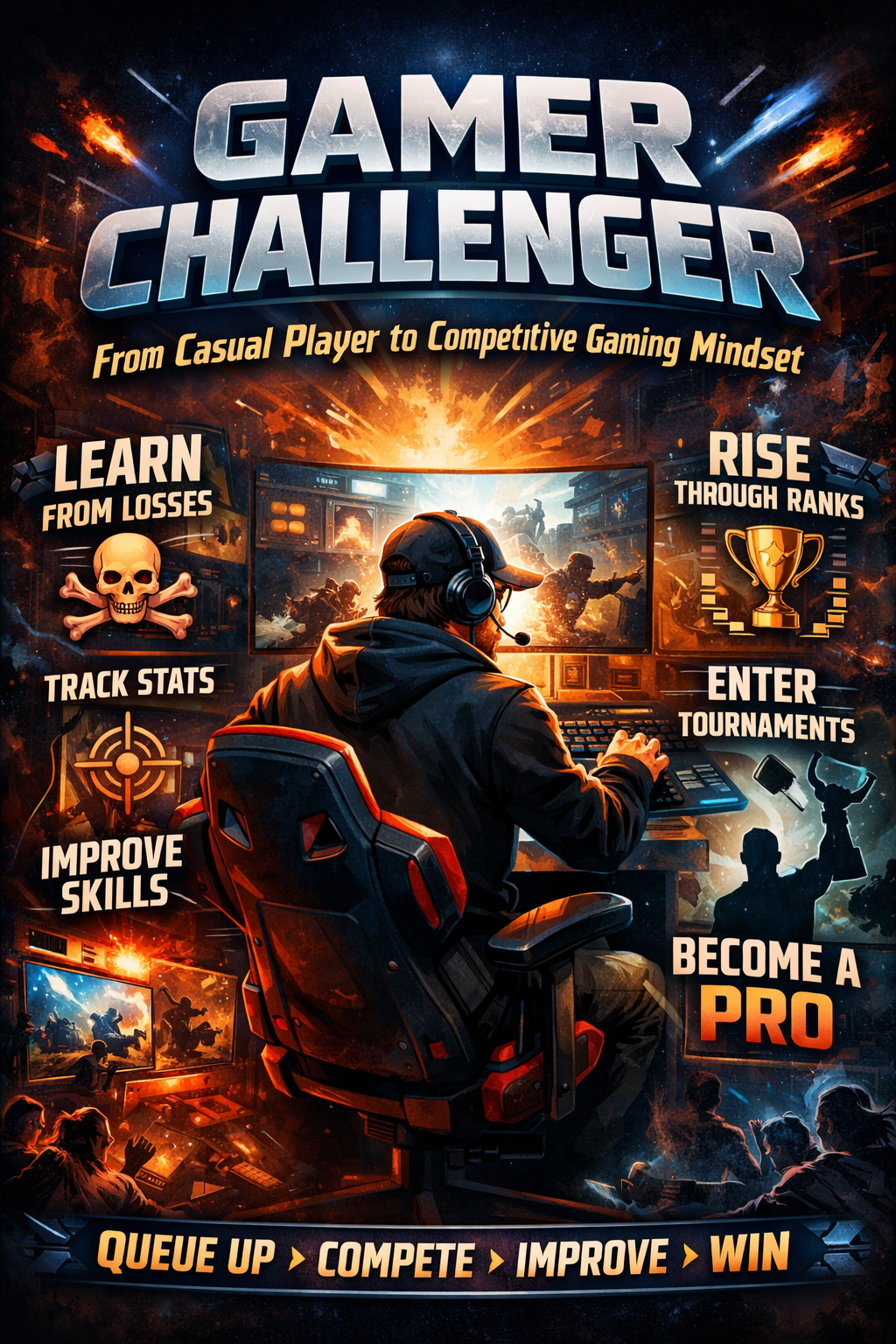
That’s the moment gaming stops being “just a game” and becomes a test of skill, discipline, and improvement. Welcome to the world of the Gamer Challenger, where winning matters—but learning matters more.
Gaming Has Changed—and So Have Gamers
Modern gaming isn’t only about entertainment anymore. Ranked systems, competitive ladders, and skill-based matchmaking have turned games into performance environments.
A Gamer Challenger isn’t defined by hours played. They’re defined by how they play:
- With intent
- With focus
- With a desire to improve after every match
They don’t queue just to pass time—they queue to get better.
The Gamer Challenger Mindset: Skill Over Excuses
Casual gamers look for reasons they lost.
Gamer Challengers look for lessons.
Instead of blaming teammates, lag, or bad luck, challengers analyze decisions, positioning, timing, and mechanics. Losses aren’t failures—they’re feedback.
And yes, sometimes that feedback hurts.
Casual Gamer vs Gamer Challenger: Same Game, Different Purpose
A casual gamer finishes a match and moves on.
A Gamer Challenger finishes a match and replays it in their head.
The difference isn’t talent—it’s intention. Challengers seek stronger opponents because they understand one simple truth: comfort never creates progress.
Skill-Based Challenges: Where Growth Gets Real
Beating weaker opponents feels good. Losing to better ones feels uncomfortable—but valuable.
Skill-based challenges remove randomness and expose weaknesses quickly. Fair competition forces improvement, not ego protection. Every mistake becomes visible, and every win actually means something.
This is where real growth happens.
Performance Tracking: When the Numbers Tell the Truth
You might feel like you’re improving.
Stats will confirm—or politely disagree.
Win rates, accuracy, decision timing, positioning—data doesn’t care about confidence. Gamer Challengers rely on performance tracking because improvement without measurement is just guessing.
Yes, stats can be brutal. That’s why they work.
Community & Competition: Iron Sharpens Iron
Strong competitive communities create better players.
Gamer Challenger environments thrive on:
- Respectful rivalry
- Skill-based matchmaking
- Learning from stronger players
Progress accelerates when competition is healthy and improvement is valued more than trash talk.
Games Where Gamer Challengers Thrive
Not all games reward skill equally.
FPS titles, MOBAs, battle royales, fighting games—these genres naturally support challenger ecosystems. They reward precision, strategy, adaptability, and composure under pressure.
Luck may help, but skill decides who climbs.
Why Gamer Challengers Improve Faster
Random play leads to random results.
Structured competition leads to consistent growth.
Gamer Challengers improve faster because they:
- Practice with purpose
- Review mistakes
- Set measurable goals
- Accept short-term losses for long-term gains
It’s not glamorous. It’s effective.
Challenger Systems vs Traditional Gaming Platforms
Traditional gaming platforms focus on keeping players entertained.
Challenger systems focus on making players better.
One prioritizes comfort.
The other prioritizes growth.
That difference shapes completely different types of gamers.
From Gamer Challenger to Esports: The Real Starting Line
Every professional gamer was once an unknown challenger.
Ranked ladders, competitive challenges, and community tournaments act as filters—separating consistency from luck. While not everyone becomes a pro, challenger systems provide the visibility and structure where talent can be noticed.
They don’t create professionals. They reveal them.
Personal Branding: Skill Opens Doors, Branding Keeps Them Open
In competitive gaming, performance gets attention—but personality creates opportunity.
Gamer Challengers who document their journey through streaming, clips, or analysis build credibility beyond rankings. Skill plus visibility is a powerful combination in today’s gaming ecosystem.
The Reality Nobody Talks About
Being a Gamer Challenger isn’t easy.
There’s pressure, burnout, plateaus, and moments of doubt—often late at night after a losing streak. Competitive growth demands mental resilience as much as mechanical skill.
Progress isn’t linear. Neither is confidence.
The Future of Gamer Challenger Ecosystems
AI-driven matchmaking, advanced analytics, and global competition are shaping the next generation of gaming.
The future isn’t about more players—it’s about better ones. Gamer Challenger systems are building environments where improvement is visible, earned, and respected.
Final Thoughts: Are You Playing to Relax—or to Rise?
There’s nothing wrong with casual gaming.
But once you choose competition, there’s no going back.
If you’re ready to stop guessing, stop blaming, and start improving, the Gamer Challenger mindset is already waiting.
Queue smarter. Compete fairly. Improve relentlessly.
- Stop Playing on Autopilot. Start Playing to Improve.
- Your Rank Is Temporary. Your Skill Is Not.
- If Every Match Teaches You Something, You’re Already a Challenger.